
The first 30 days of online coaching: from application to review
An illustrative 30-day workflow connecting onboarding, app use, feedback and programme review.

Use this as an adaptable example
The first month connects application, assessment, programming and feedback. This is an illustrative workflow, not a named client case or measured result. Adapt timing to your service, capacity and the client’s situation.
The goal is not to use every feature within a month. Clients need clear tasks, accessible material and an agreed feedback routine. An online coaching platform such as BEP-X can organise the steps, but you define and explain the professional and communication framework.
Before starting, align promise and delivery
Technical setup can be quick while the coaching relationship continues beyond thirty days. Configure the branding and initial AI Clone coaching foundations of your BEP-X online coaching app in as little as 15 minutes when access is active, branding assets are ready and you start from the available defaults. After saving the required settings and checking readiness, welcome your first client. Their assessment, programme review and regular feedback are the next parts of working together.
Before the first task, summarise goals, programme period, reviews and communication. Explain administrative steps according to your own terms. Expectations should be clear before training rather than discovered halfway through it.
This is where marketing becomes service. Busy beginners need proportionate onboarding. Explain why assessment information is needed and how it informs decisions so the process feels useful rather than like unexplained paperwork.
Early days: assessment and review
Review goals, experience, equipment and available time, clarifying uncertain or conflicting answers. Handle health issues within your competence and refer before programming where appropriate. Stored information becomes useful through sound interpretation.
Establish shared meanings for regular training, realistic times and reporting difficulties. Those answers shape programming and review. Adapt the workflow to the person rather than fitting the person into an unexplained generic process.
Week one: programme delivery and app introduction
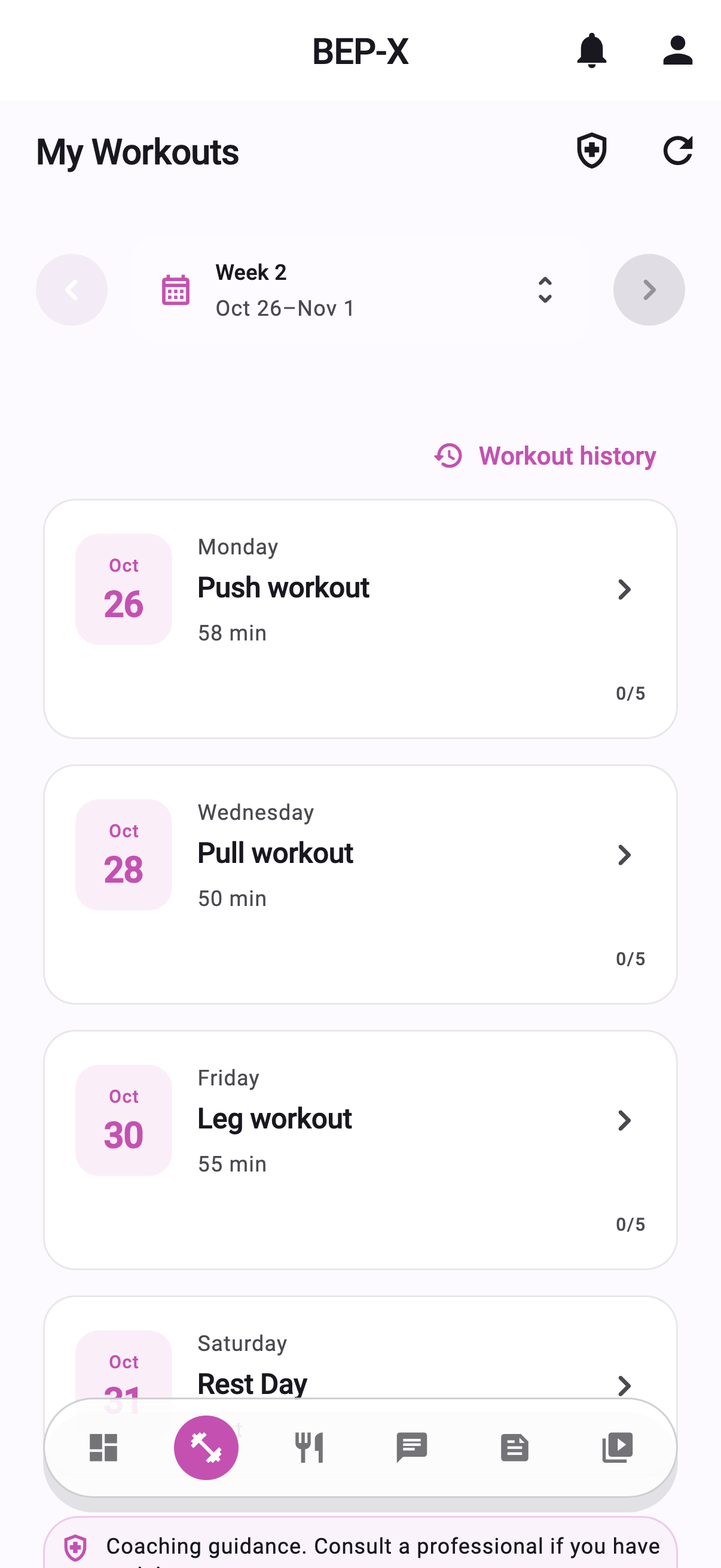
Prepare a reviewed starting programme manually or with AI support. Explain the weekly framework and first task. In BEP-X, introduce workouts, set logging and questions, focusing on what is needed for the first session rather than every feature.
Ask the client to try the basics and report confusion. Provide exercise explanations in context. A successful first week here means programme access, understandable tasks and a known route to help, not a promised body-weight or performance result.
Week two: identify the actual obstacle
Review completed work and difficulties using logs and discussion. Missed sessions can arise from scheduling, instructions or complexity. These need different responses. Understand the obstacle before changing the programme or sending more motivational messages.
A clearer instruction, adjusted schedule or exercise change may help. Explain what changed and why. Explain deliberate continuity too: attention is not demonstrated only by issuing an entirely new plan.
Week three: build on a useful baseline
If the structure is appropriate, deliberately save a reference training week for the client. Reference-based generation can use it while you control replacements and load changes. Elapsed time alone is not a reason to replace everything.
Use manual muscle-group load percentages or AI suggestions where appropriate, then review the result against technique, performance and feedback. Reconsider the reference if goals or constraints change. A baseline is valuable only while it still fits.
Week four: review and decide the next step
Review sustainability, clarity and support needs alongside numbers. Combine completion records with client experience to decide what comes next and understand which changes actually helped during the first weeks.
Agree on a few practical priorities: more consistent logging, keeping a suitable schedule or a justified programme change. Give a clear explanation rather than only a new task list. App records then support the coaching conversation instead of replacing attention.
Adapt timing and responsibilities to your service
These timings are not automatic platform features. You organise promised reviews, align any in-person sessions and adjust for onboarding needs. Scheduling supports appropriate work rather than becoming a target in itself.
Use the first month to improve your onboarding guide and service introduction. Recurring questions reveal missing explanations. This helps marketing reflect actual delivery and gives the next client a better-tested process.
What if onboarding moves at another pace?
Adapt pace if basic steps take longer. The first month establishes a working relationship rather than testing the client. Do not skip essential assessment or review merely to appear faster; adjust timing while preserving important foundations.
Experienced clients still need an introduction to your interface and routines. Familiarity with another system does not imply identical habits. Tailor explanations to existing knowledge, then use shared experience to shape the next period.
Related app and workflow
An online coaching app for working together
Related guides
Workout planning in a personal trainer app: reference plans
Personal trainer marketing: from first enquiry to paying client